

The Hidden Effects of Poor Posture in the Digital Age
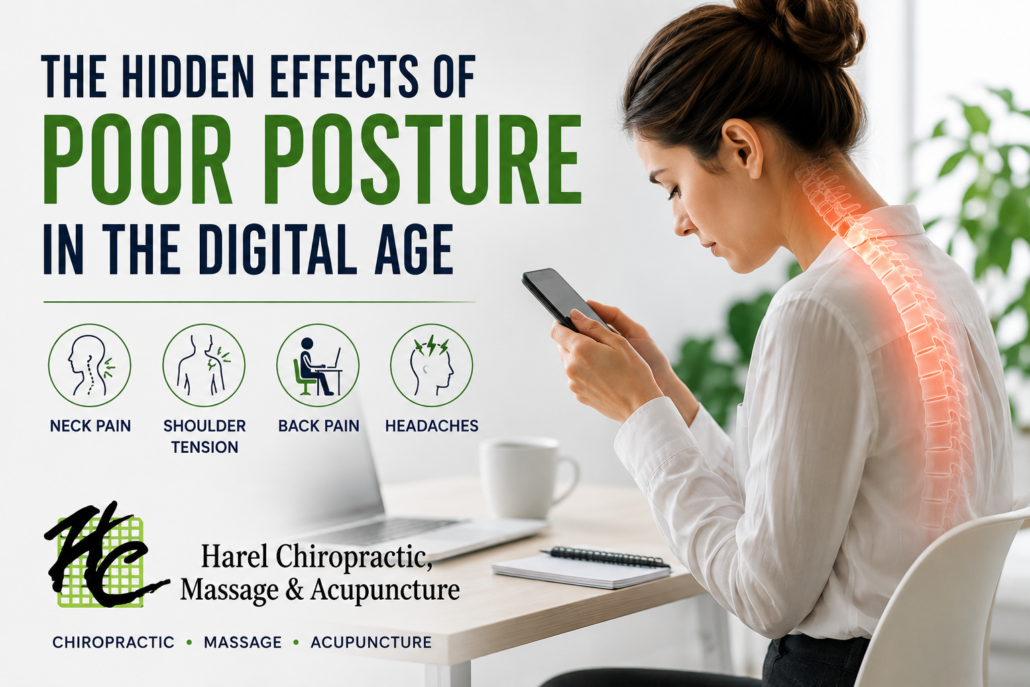
Is Your Daily Routine Affecting Your Health?
Whether you’re working at a computer, scrolling on your phone, driving long distances, or helping your children with homework, chances are you’re spending more time sitting than ever before. While technology has made life more convenient, it has also introduced a growing health concern—poor posture.
Many people don’t realize that the aches and pains they experience each day may not be caused by aging at all. Instead, they may be the result of the way they sit, stand, and move throughout the day.
At Harel Chiropractic, we frequently see patients who are surprised to learn that improving their posture can reduce pain, improve mobility, and even increase their energy levels.
What Is Poor Posture?
Posture refers to the position of your body while standing, sitting, or moving. Good posture keeps your bones, joints, muscles, and ligaments properly aligned so your body can function efficiently.
Poor posture occurs when your body remains in unhealthy positions for long periods of time. Common examples include:
- Looking down at your phone for extended periods
- Slouching while sitting at a desk
- Leaning forward toward a computer monitor
- Crossing your legs for hours
- Driving with rounded shoulders
- Sleeping in unsupported positions
While these habits may seem harmless, repeating them every day can place tremendous stress on your spine.
The Rise of “Tech Neck”
One of the most common posture-related conditions today is known as Tech Neck.
Every time you tilt your head forward to look at a phone or tablet, the weight placed on your neck increases dramatically.
A human head weighs approximately 10–12 pounds when held in a neutral position. As your head tilts forward, the effective force on your cervical spine increases significantly, placing additional strain on the muscles, joints, and discs of the neck.
Over time, this repeated stress may contribute to:
- Neck pain
- Shoulder tightness
- Upper back pain
- Frequent headaches
- Muscle fatigue
- Reduced range of motion
- Tingling or numbness in the arms and hands
Signs Your Posture May Be Causing Problems
Many people assume discomfort is simply part of getting older. However, poor posture often creates symptoms that develop gradually over months or even years.
You may benefit from a posture evaluation if you experience:
- Frequent headaches
- Neck stiffness
- Shoulder pain
- Mid-back discomfort
- Lower back pain
- Tight muscles
- Fatigue after sitting
- Difficulty standing straight
- Limited flexibility
- Pain while driving or working at a computer
Why Posture Matters More Than You Think
Your spine protects your nervous system, which controls nearly every function in your body. When posture places excessive stress on the spine, surrounding muscles work harder than they should.
This can lead to:
- Increased muscle tension
- Joint irritation
- Reduced mobility
- Poor balance
- Faster physical fatigue
- Difficulty exercising comfortably
Maintaining healthy posture helps your body move more efficiently while reducing unnecessary strain.
Simple Ways to Improve Your Posture
The good news is that small daily changes can make a significant difference.
Consider these healthy habits:
Raise Your Screen
Your computer monitor should be at eye level so you aren’t constantly looking downward.
Bring Your Phone Up
Instead of bending your neck toward your phone, raise the device closer to eye level whenever possible.
Take Movement Breaks
Stand up every 30–60 minutes.
Walk around.
Stretch.
Reset your posture.
Even one or two minutes of movement can reduce muscle fatigue.
Strengthen Your Core
Strong abdominal and back muscles provide better support for your spine.
Check Your Workstation
Your feet should rest flat on the floor.
Your knees should remain near a 90-degree angle.
Your shoulders should stay relaxed.
Your elbows should remain close to your sides.
How Chiropractic Care Can Help
Even after improving your posture, years of poor habits may leave joints stiff and muscles imbalanced.
Chiropractic care focuses on restoring healthy movement within the spine while helping patients improve the way their bodies function.
Depending on your individual needs, treatment may include:
- Chiropractic adjustments
- Postural assessments
- Stretching recommendations
- Home exercises
- Lifestyle guidance
- Ergonomic recommendations
- Massage therapy
- Acupuncture when appropriate
Our goal is not simply to relieve pain—but to help patients move better and prevent future problems.
Small Changes Today Can Prevent Bigger Problems Tomorrow
Poor posture develops gradually, but so does better posture.
The earlier posture problems are addressed, the easier they are to correct before they become chronic sources of pain.
If you’ve been experiencing neck pain, headaches, shoulder tightness, or back discomfort, your posture may be contributing more than you realize.
At Harel Chiropractic, we’re committed to helping patients improve their health naturally through personalized chiropractic care and education.
Schedule Your Posture Evaluation
If you’re noticing the effects of long hours at a desk or frequent device use, we’d love to help.
Contact Harel Chiropractic today to schedule an appointment and learn how improved posture can help you feel your best.
Frequently Asked Questions
Can poor posture really cause headaches?
Yes. Muscle tension in the neck and shoulders can contribute to tension-type headaches and may aggravate existing headache conditions.
How long does it take to improve posture?
Many people notice improvements within a few weeks of consistently practicing better posture and following personalized treatment recommendations.
Is poor posture permanent?
No. In many cases, posture can improve with chiropractic care, strengthening exercises, stretching, and healthier daily habits.
Can children develop poor posture?
Absolutely. Increased use of phones, tablets, and computers means many children and teenagers are already developing posture-related issues, making early awareness especially important.
